What mattersShow
- The system offers advanced manufacturing operators a path to reduce capital expenditure requirements by using smaller, more flexible robotic arms for work previously demanding massive machinery.
- Primary sector: Robotics & Autonomous Systems
- The next milestone is a published operational demonstration showing the system machining a specific, complex component size or material under simulated field conditions.
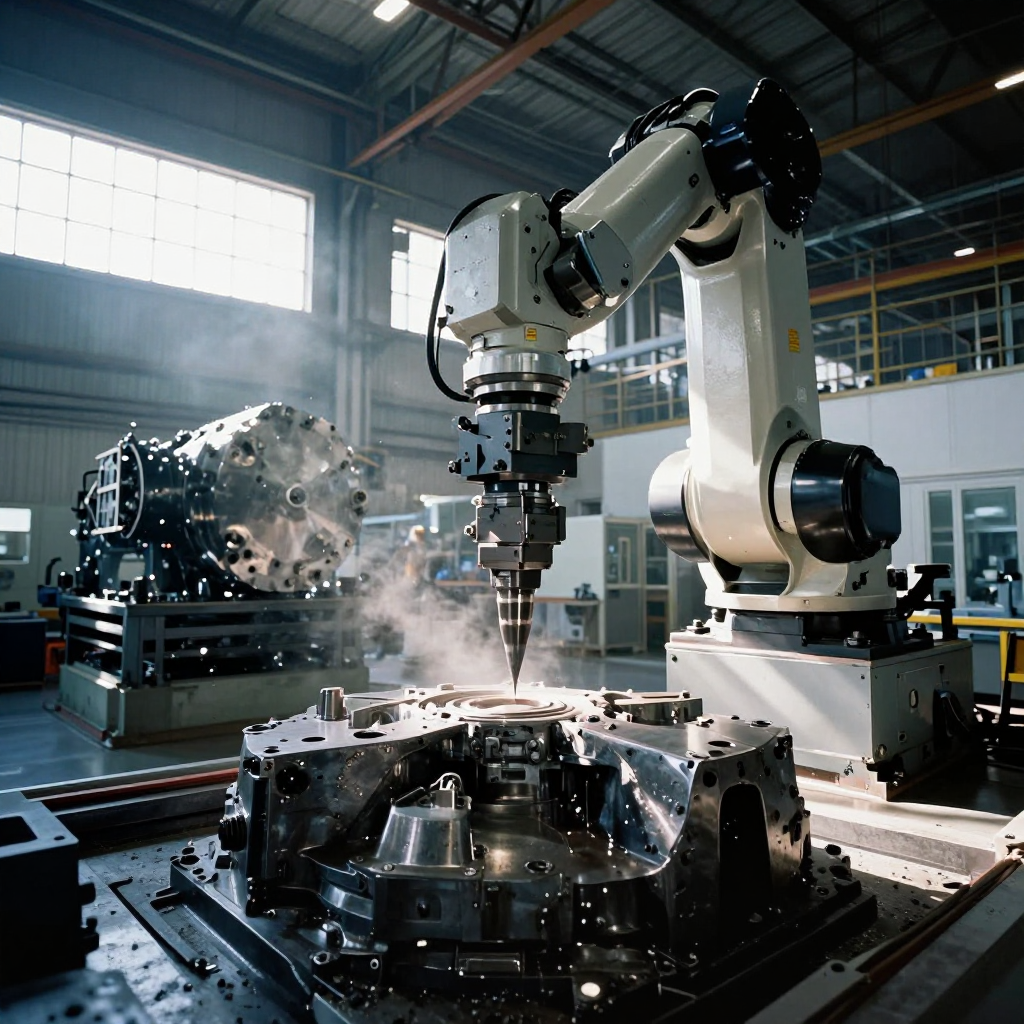
A research effort led by Asymmetry Last Line (ALL) at UBC is addressing a core limitation in industrial machining: vibrations compromise the precision required when cutting large metal components. Prof. Adam Thomas Clare’s team has developed a solution utilizing a rotating mass mounted on the robot arm to actively counteract these disruptive vibrations.
This technological advance shifts the operational calculus for several high-value sectors, including aerospace, marine construction, and energy. The primary consequence is enabling comparatively inexpensive, flexible robots to perform complex machining tasks that traditionally required large, capital-intensive machinery. For defense contractors and advanced manufacturing operators, this directly translates to reduced initial capital expenditure (CAPEX) while maintaining the necessary precision.
Operators must evaluate whether the cost savings of adopting flexible, small robotic systems outweigh the potential performance trade-offs compared to established, large-scale industrial machinery.
The system’s potential application scope is broad, extending past simple component cutting into areas requiring robust performance in extreme or remote environments. The development benefits from significant institutional support, including an $8.76 million PacifiCan investment and access to specialized equipment like marine robotics tanks and low-temperature testing infrastructure via the UBC Accelerator.
This ecosystem approach helps de-risk adoption by providing smaller companies with structured opportunities for prototyping, demonstrating feasibility, and moving technologies from pure design through rigorous industry testing.
Put this signal in context
Get the week’s essential Canadian tech.
Five minutes. One useful email. No noise.
Sources & technical notesShowHide
Where this story is grounded
Check the cited material to distinguish announcements from demonstrated results.
Evidence limit: The technology remains in an accelerator/prototyping phase; therefore, reported claims regarding cost savings and performance are based on preliminary testing and projections.
What to evaluate next
This box highlights the systems, workflows, and decisions the article helps you assess.
Stay in the signal after this story.
Follow the company page, then jump into the broader sector hub before you leave the story.
Keep the company context attached as you read the rest of the coverage.
Weekly Canadian tech signals, distilled for operators.
Subscribe to the signalFree weekly briefing • Unsubscribe anytime
Browse practical reports and guides for a structured next step.
Browse reports