Explore the newsroom
Find stories by company, builder, tech angle, or location.
20 companies · 20 stories
Boardy AI
 ON
ONAI networking company that helps professionals and founders find relevant people and make warm introductions.
Cohere
ONAI scaleup developing large language models (LLMs) for generative AI applications.
D-Wave Quantum Inc.
 BC
BCDesigns specialized processors utilizing quantum mechanics for solving complex optimization problems.
Anthropic
AI development company
Apple
Consumer electronics and software company.
BetaKit
 QC
QCOfficial media partner of Toronto Tech Week
Blackline Safety Corp.
 AB
ABDevelops digitally connected, wearable safety tech for the industrial sector.
1Password
ONIdentity security and access management software for individuals and corporations.
Cohere Technologies
Developer of Universal Spectrum Multiplier (USM) software for boosting wireless capacity.
AtkinsRéalis Group Inc
QCGlobal professional services firm providing engineering and consulting services.
Clio
BCLegal technology company providing cloud practice-management software for law firms.
Constellation Software
ONSoftware holding company that acquires and operates vertical-market software businesses across many industries.
Biossil Inc.
ONBiotech startup that uses an AI platform to identify and develop discarded drug molecules for new therapies.
Caseway AI
BCAI chatbot for legal research, summarizing Canadian legal information and court decisions.
Aspect Biosystems
BCDevelops bioprinted human tissues designed to replace, repair, or supplement biological function.
Carbon Upcycling Technologies
ONA cleantech firm that converts captured CO₂ and industrial byproducts into eco-friendly cement alternatives.
Crwn.ai
BCTech that uses sensors and AI to monitor utility transmission lines for wildfire prediction and prevention.
Canada
National strategy development for AI adoption.
Blumind Inc
Analogue, low-power chip architecture for AI applications.
CentML
AI model efficiency software for faster processing on existing hardware.

Canadian Defence Tech Focus: How Dual-Use Innovations Define National Sovereignty
BetaKit's focus on Canadian autonomy and security, particularly highlighted during the 'Vantage Points' panel with leaders like Eliot Pence (Dominion Dynamics), Kath Intson (Sentinel R&D), and Christian Weedbr...
↗ Technological self-sufficiency (AI, dual-use hardware/software) is now the primary economic and security metric driving Canadian venture capital and innovation policy.

Anthropic's Mythos Model Poised to Elevate Offensive Cyber Testing Capabilities
Evan Solomon's conversation with Anthropic PBC underscores a critical junction point for Canadian cybersecurity: the moment that advanced AI transitions from assisting threat intelligence to autonomously explo...
↗ The availability of autonomously flaw-chaining AI models like Mythos necessitates a complete overhaul of traditional risk modeling. For Canada, this demands immediate, coordinated governmental and private-sector investment to update foundational operating systems and vendor stacks.

Canada Launches C$890 Million Program to Establish Sovereign AI Supercomputing Backbone
Minister Evan Solomon's push for a 'sovereign AI supercomputing system' represents more than just a funding round; it signifies a critical industrial strategy aimed at making Canada a self-sufficient hub for a...
↗ The C$890 million SCIP moves AI compute from being a service commodity to a nationally managed, integrated economic utility. This institutional focus on building both the physical infrastructure and the operational support structure greatly de-risks the massive investment, guaranteeing that the resulting supercomputer will be optimized for Canadian use cases and talent development.

From Policy to Practice: How Regional Funding is Anchoring Applied AI Across Atlantic Canada
Evan Solomon's announcement represents more than just a round of federal funding; it signals a deliberate, coordinated strategic pivot for AI adoption across Canada’s diverse regions. For a tech observer, the...
↗ This federal funding initiative establishes a sophisticated, commercially-minded model for AI adoption that prioritizes regional market integration, validating the critical need to move AI from research 'pilots' into revenue-generating, SME-focused tools.

Canada Builds Sovereign Tech Pipeline: CDL Defence and Wolf Advanced Technology Anchor National Security's Future
The core theme here is the systematic maturation of Canada's high-tech capabilities from the laboratory to the mission-critical field. At the heart of this movement is Creative Destruction Lab (CDL), propelled...
↗ This investment marks a maturation point for Canadian tech policy, moving beyond mere R&D grants. By funding CDL's accelerator and Wolf’s manufacturing backbone simultaneously, the government is structurally connecting cutting-edge dual-use IP creation with secure, domestic production capability, ensuring Canadian founders can bring their innovations to market using sovereign supply chains.

Beyond the Factory Floor: e-Zinc Pioneers AI Integration for Next-Gen Battery Quality Control
The core vision driving this sector transformation, championed by innovators like Evan Solomon and realized by companies such as e-Zinc, is clear: to bridge the gap between advanced AI theory and the gritty re...
↗ The deployment of AI-powered quality control in battery manufacturing is transforming energy storage from a physical product into a digitally guaranteed, high-performance asset, thereby bolstering Canada's critical clean energy supply chain.

Canada's AI Champion at Crossroads: Analyzing the Strategic Implications of Cohere's Potential German Link-Up
From the outset, the core story is centered on the narrative of Canadian AI sovereignty, spearheaded by Cohere. Evan Solomon, Canada’s AI Minister, has repeatedly positioned Cohere as a national champion, argu...
↗ The tension between full Canadian sovereignty and necessary international partnerships marks Cohere's next phase. The strategic move toward alignment with EU partners like Germany is not a loss of control, but a sophisticated attempt to 'export' Canadian AI excellence under globally trusted and regulated standards, de-risking the tech for multinational corporate clients.

Beyond the 'Tech Bros': Analyzing the Government's Strategy to Decentralize AI's Economic Power Across Canada
Evan Solomon, the federal Minister of AI and Digital Innovation, isn't just announcing policies; he's pitching a fundamental economic philosophy: the concept of AI as a national resource, accessible to all, no...
↗ The core innovation is a policy-driven strategy to decentralize AI's economic value, moving beyond a simple research output model to focus on guaranteed, equitable access to deployment capital, mentorship, and regulatory support across all regions of Canada.

The Mythos Challenge: Why AI-Enabled Cyber Resilience is the Next Pillar of Canadian Digital Infrastructure
From the outset, Anthropic, and specifically its new model, Claude Mythos AI, has presented a paradigm shift in the cybersecurity landscape. The company’s initial strategy—keeping Mythos in a selective preview...
↗ Anthropic's Mythos AI, by offering early access to its profound vulnerability-finding capabilities, has catalyzed a critical, global conversation. For Canada, the key takeaway is that defending the digital infrastructure against AI-enabled attacks requires transitioning from reactive patching to mandatory, federally overseen architectural refactoring, establishing a new standard for 'AI-safe' public infrastructure.

How Canada's Proposed AI Fund Could Reshape Computing Capacity for Tech Scale-ups
Canada’s proposed national AI strategy signals a significant pivot from academic research support to direct economic deployment, aiming to address critical gaps in commercialization and domestic compute capaci...
↗ Canada is building an integrated economic pipeline that uses direct government funding, infrastructure mandates (100MW data centers), and guaranteed demand (anchor customer status) to de-risk and scale domestic AI commercialization.

How Canada's AI Compute Access Fund Positions Canadian Government to opens a new path for AI Compute Access Fund; National AI institutes teams
Canada's proposed national AI strategy aims to solve two core problems: the lack of domestic computational capacity and the difficulty scaling private AI commercialization. The cornerstone of this effort appea...
↗ The new AI strategy focuses on creating a managed, state-backed ecosystem of infrastructure and demand—rather than just issuing subsidies—to accelerate commercial AI deployment in Canada.

Sovereign Compute Imperative: Ottawa Funds Supercomputer Infrastructure to Secure AI Leadership
The central thesis emerging from the latest government announcements is clear: compute power, not just algorithms or models, is recognized as the primary strategic resource for modern digital economies. Evan S...
↗ Compute access is confirmed by the Canadian government as 'core infrastructure,' necessitating massive public and private funding to build domestic computational sovereignty for AI innovation.

Canada Prioritizes Sovereign Compute Over Standalone Chip Strategy
The discussion around Canada's semiconductor strategy crystallizes a core tension between dedicated industrial policy and the integrated development of sovereign compute power. While industry advocates, includ...
↗ Canada is pivoting its semiconductor policy from standalone manufacturing incentives to integrating chip capacity directly into a national Sovereign AI Compute Foundation, prioritizing end-to-end compute stack development over dedicated industrial subsidies.

Photonics, AI, and Scale: Xanadu's Strategy for Commercial Quantum Computing
The quantum computing industry is at a critical juncture, moving past theoretical breakthroughs toward the engineering challenge of scale. At the center of this transition is Xanadu Quantum Technologies Inc. a...
↗ Xanadu’s commitment to a photonic quantum platform, combined with strategic partnerships and adherence to advanced error correction principles (like lattice surgery), addresses the core industry challenge: scaling reliable, fault-tolerant quantum hardware.

Canadian Tech Takes Aim at NATO's Frontier: Dominion Dynamics Bets Big on Sovereign Autonomous Wingmen
From a national security technology perspective, the ambition radiating from Dominion Dynamics is nothing short of revolutionary. Eliot Pence, the founder, isn't just pitching a drone; he is staking a claim on...
↗ Dominion Dynamics is successfully positioning itself not as a single hardware vendor, but as an architectural systems integrator. By focusing on the autonomous data layer (the ACP/Auranet), they are creating a 'software-defined' platform that significantly lowers the barrier to entry and increases interoperability, making it a more scalable and economically appealing choice for Canada's defense portfolio.

A Canadian Quantum Leap: Xanadu's Photonic Architecture Positions Canada at the Forefront of Quantum Computing
Christian Weedbrook and Xanadu are not merely another quantum computing startup; they represent a profoundly sophisticated vision for the next generation of computation. Weedbrook’s core thesis—and the brillia...
↗ Xanadu's commitment to photonic quantum computing offers a scalable, room-temperature, and highly connectable alternative to competing modalities. This strategic choice, combined with demonstrated error-correction capabilities and major government interest (Project OPTIMISM), solidifies its leadership position in the global quantum race.

Beyond Buzzwords: How Dominion Dynamics is Forging the Future of Arctic Defense and Canadian Indigenous Tech Sovereignty
Eliot Pence and Dominion Dynamics are not just building a sensor network; they are attempting to architect a critical infrastructure layer for Canada's most challenging operational domain—the Arctic. The core...
↗ Dominion Dynamics embodies the necessary shift in Canadian defense tech: moving from isolated 'capabilities' to integrated, resilient 'utility services.' For the company to succeed, the Canadian government must streamline its procurement to match the velocity of the innovation, allowing the 'digital archive' of the country to be built rapidly and continuously.

Beyond 'Onshore': Sentinel R&D Redefines Canadian Sovereignty Through Indigenous Tech Build
Kath Intson, CEO of Sentinel R&D, isn't just advocating for increased defense spending; she is initiating a vital philosophical debate about what 'sovereignty' means in the 21st-century tech age. Her central a...

From Silicon Photons to Deep Tech: Xanadu’s Quantum Leap Reaffirms Toronto’s Position as a Frontier Innovation Hub
Christian Weedbrook, the visionary founder and CEO of Xanadu, has positioned the company not merely as a quantum computing firm, but as an architect of the next era of scalable deep tech. His ambition—to be th...
↗ Xanadu is de-risking quantum computing through material science and scalable manufacturing partnerships (e.g., with Tower Semiconductor), cementing its focus on realizing a fault-tolerant, photonic quantum data center in Toronto.
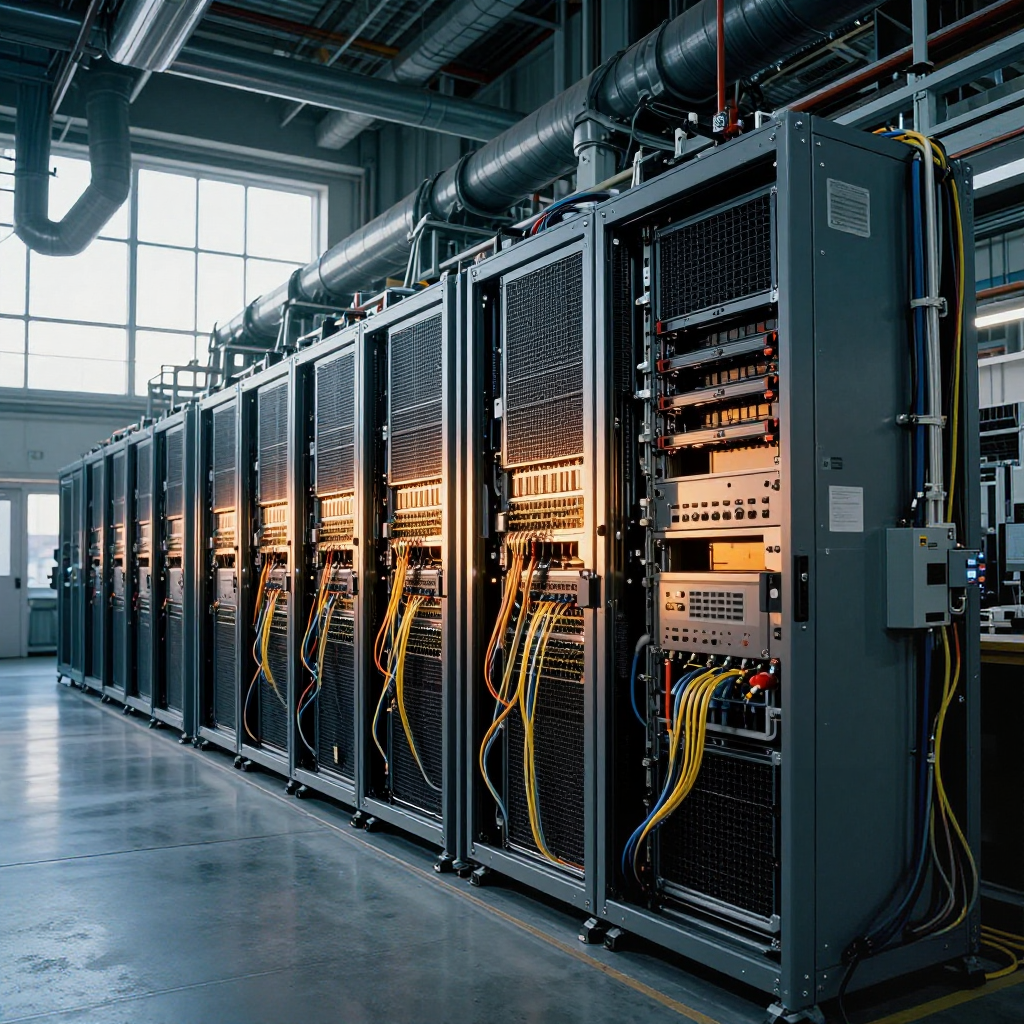
How Quantum Partnerships Could Reshape Canada’s Role in High-Performance Computing Infrastructure
The narrative surrounding quantum computing often focuses on theoretical breakthroughs—the promise of Qubits and exponential computational power. However, the operational reality, as highlighted by Xanadu Quan...
↗ Xanadu's strategy proves that commercializing quantum computing requires establishing massive, government-backed data centre infrastructure through deep partnerships with defense contractors and telecom giants.